I think I will have to stop going for the food shopping - the local supermarkets are having so many seasonal special offers in every week that are just so hard to resist!
For example, this week I picked up another 24 strawberry plants (8 early, 8 late and 8 all year) and a pack of shallots from Aldi all at £1.99 per pack.
I also picked up a 3kg box of Blood, Fish & Bone powder for £3.99, and it was touch and go as to whether I purchased a cold frame, but I manfully resisted the temptation - for this week at least.
I was actually looking for a few packs of Asparagus, but they had already sold out despite them only having been on sale that day.
I had previously decided that I wasn't going to grow asparagus as it would tie up a bed completely, but this was a deal almost too good to miss.
Unfortunately I missed it.
This will add another £12 to my costs for the year. I have also decided to include the costs of any seeds that I purchased last year to be used this year.
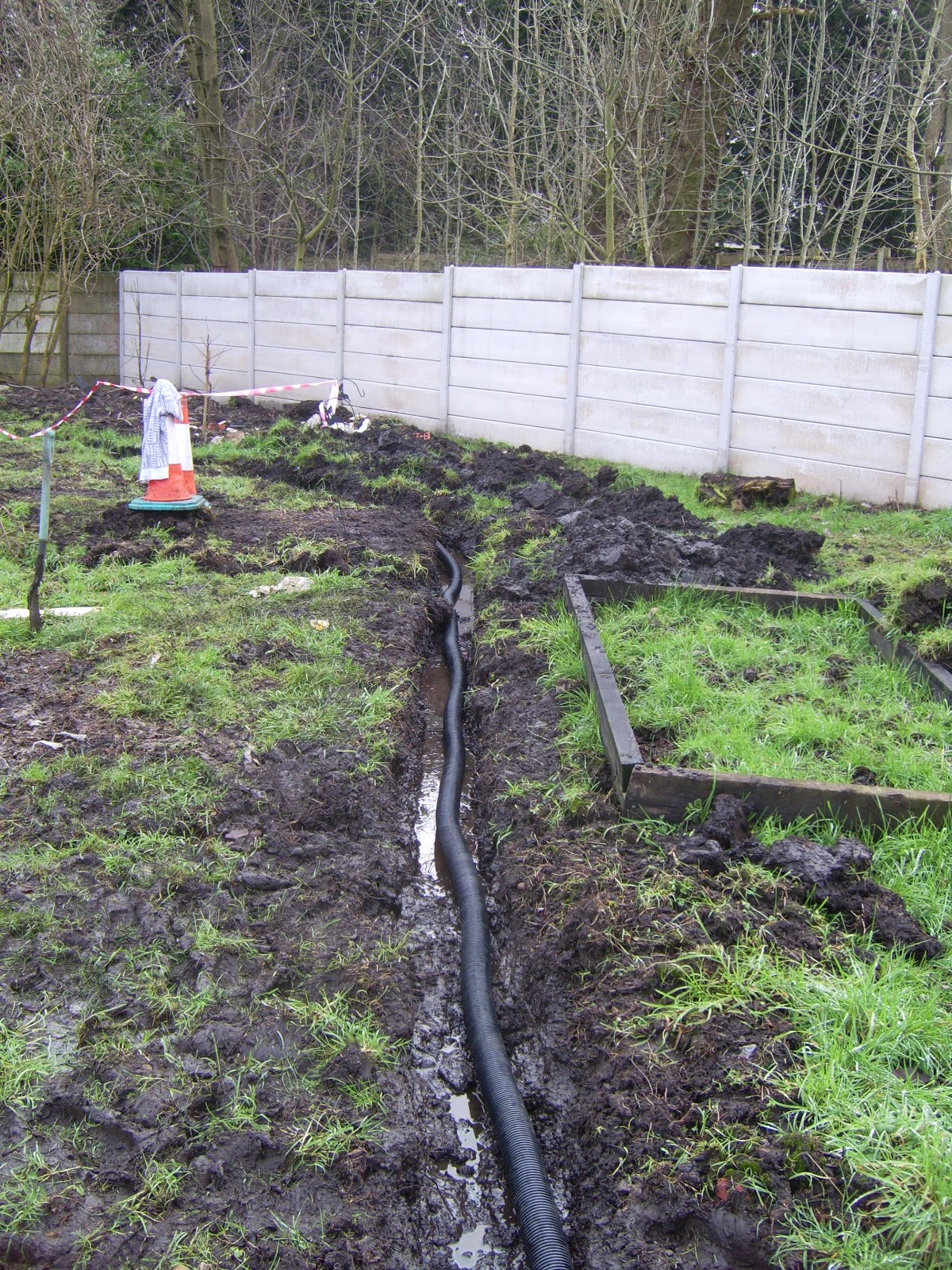
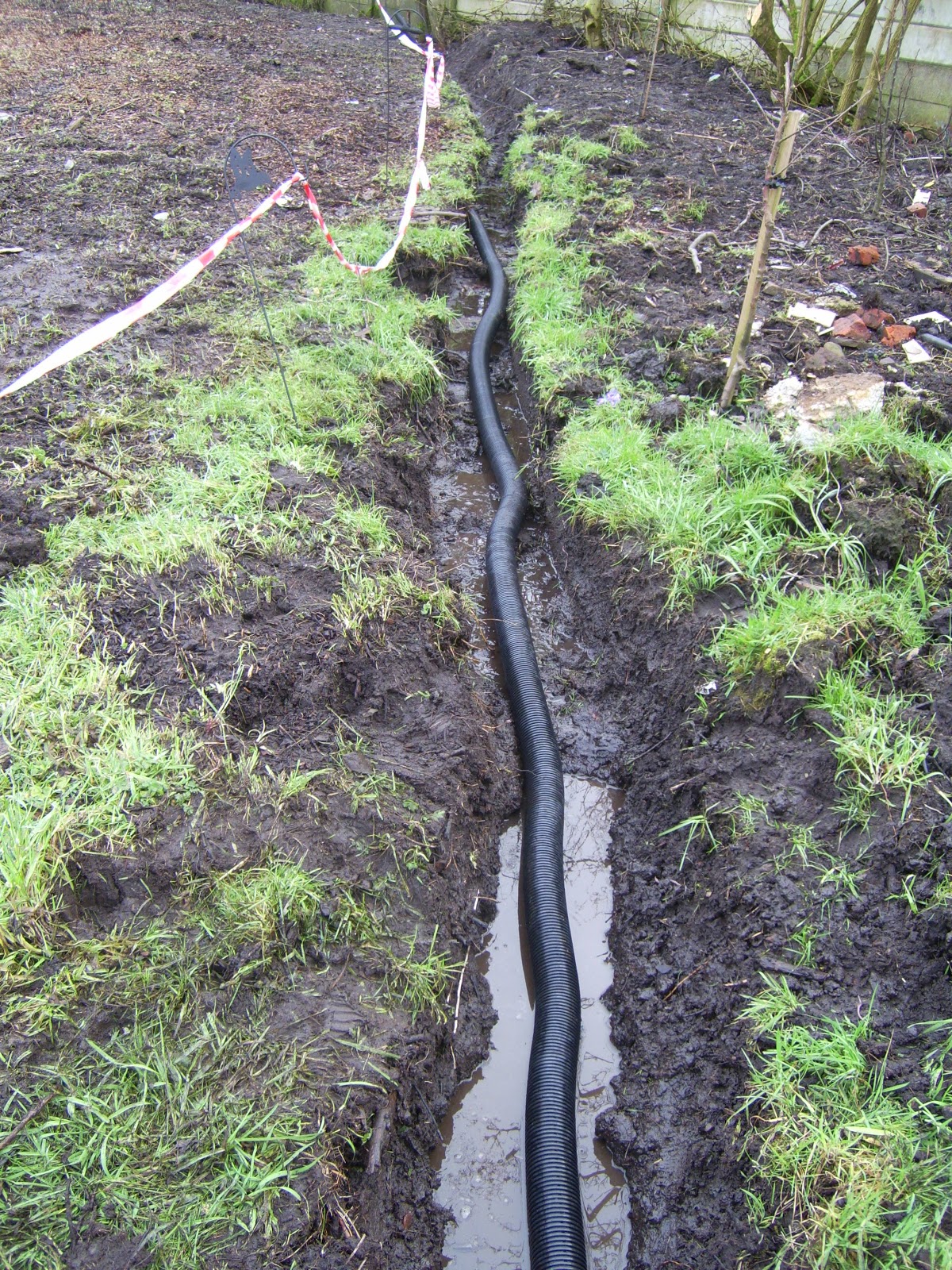
The drainage channel has had a bit of a test over the past few days as we have had snow, rain, hail and everything in between. A couple of sections need to be deepened by a couple of inches, and I also need to carry on deepening the channel through the orchard to allow the water to drain more easily but overall it appears to be working as planned.
I have some 3/4" stone at home which I am going to use to fill the drainage channel but I hadn't brought it with me today so I couldn't start to lay the path over the channel as planned.
Whilst looking at the rhubarb bed which is currently the only piece of infrastructure in place on the top half of my plot (apart from the pond) I have realised that it is in the wrong place and needs to be moved about 3 or 4 feet back to line up with the edge of my plot. This is a bit of a nuisance as the ground under the bed has already been dug over and enriched with loads of manure, but there is no helping it. Also, part of the spoil heap left by the digger is in the way so I will have to move that first.
As I couldn't start on the path over the drain I decided to start on the path next to my existing beds instead. I laid some black membrane down and covered it with a few inches of bark chippings, then moved some of the flagstones from the existing paths to the new path, mainly to give me an idea of the amount of space that I will have to build the new beds and also plant the fruit bushes between the two new paths.
Another cost that I hadn't counted on will be the cost of some scaffolding boards to make the soft fruit and herb beds. I am not going to use the planks I already have because the new beds will only be 24" wide, and as the original wood I have is 3" wide that will be far too much of the bed taken up by the wood edgings.
We have quite a large number of scaffolding boards on the plot at the moment - cost to plotholders is only 20p per foot, so as I will need approximately 48 foot to start with, that works out at roughly £10 for a bed 19' by 2'.
Not bad at all.
First Signs of Life
After planting up my first leeks and beans just over a week ago I thought I would share their progress.
No signs at all from the Runner Bean Sonesta (on the left), but three strong plants from Runner Bean Enorma and eight out of twelve of the Broad Bean Aquadulce are coming through.
These have been kept on my kitchen table which is out of direct sunlight and watered from the bottom.
One thing I have noticed is a couple of very spindly shoots also sprouting alongside the beans, obviously sonething that is coming from the potting compost.
As fast as they come up I have been removing them, but I am a bit disappointed that the compost isn't as sterile as it should be.
| Broad and Runner Beans - 10 days after sowing |
These have been kept on my kitchen table which is out of direct sunlight and watered from the bottom.
One thing I have noticed is a couple of very spindly shoots also sprouting alongside the beans, obviously sonething that is coming from the potting compost.
As fast as they come up I have been removing them, but I am a bit disappointed that the compost isn't as sterile as it should be.
I also planted up 48 leeks at the same time as the beans, but so far only one shoot is showing.
A little bit disappointing, but the shoot that is showing looks to be quite a strong one.
If they all come up like that then they should be soon ready for planting out at the plot.
15 Seconds of Fame?
It was a bit of a different start to the day on the allotment yesterday.
I found myself crouching down over my cabbages with our Association Secretary, Diane, and having to hold that position for several minutes whilst a very industrious photographer snapped away at us from all angles.
For a while now, Diane and I have been talking about starting a 'Grow it Yourself' group that would provide advice and a place to go to for help with any aspect of gardening, whether it be allotment related or even what to grow on a small balcony of a high rise flat.
We had long felt that with the recent upsurge in interest in growing your own food many people had gone out and bought seeds and seedlings from the local Garden Centres, planted them out but then didn't know what to do with them, so their crops failed. We wanted people to be successful and to be able to complete the whole cycle from seed to plate.
We have managed to get a room at a local school and even persuaded local plot holder to do a short talk for us. All allotments in the area had been contacted and asked to support us by attending, but what we really needed was to get the general public involved.
Click here to see the Advertising Poster for GYO Group
I had a contact at the local free paper, so we sent her a press release and she was straight in touch the following morning, very enthusiastic, and wanting to send over a photographer to get pictures to make the story stand out in the paper.
So there we were, grinning inanely for the camera as we pointed at cabbages, leaned on forks and shovels and generally tried to look both industrious and intellectual at the same time. I hope it works and there is plenty of interest and attendance at the first meeting.
I found myself crouching down over my cabbages with our Association Secretary, Diane, and having to hold that position for several minutes whilst a very industrious photographer snapped away at us from all angles.
For a while now, Diane and I have been talking about starting a 'Grow it Yourself' group that would provide advice and a place to go to for help with any aspect of gardening, whether it be allotment related or even what to grow on a small balcony of a high rise flat.
We had long felt that with the recent upsurge in interest in growing your own food many people had gone out and bought seeds and seedlings from the local Garden Centres, planted them out but then didn't know what to do with them, so their crops failed. We wanted people to be successful and to be able to complete the whole cycle from seed to plate.
We have managed to get a room at a local school and even persuaded local plot holder to do a short talk for us. All allotments in the area had been contacted and asked to support us by attending, but what we really needed was to get the general public involved.
Click here to see the Advertising Poster for GYO Group
I had a contact at the local free paper, so we sent her a press release and she was straight in touch the following morning, very enthusiastic, and wanting to send over a photographer to get pictures to make the story stand out in the paper.
So there we were, grinning inanely for the camera as we pointed at cabbages, leaned on forks and shovels and generally tried to look both industrious and intellectual at the same time. I hope it works and there is plenty of interest and attendance at the first meeting.
Solution to the Drainage Problem?
At long last I am hopeful that the water logging problems I have been having with the top half of my plot may be on the way to being sorted.
I didn't get rid of all of the water as you can see from the picture, but that isn't necessarily a bad thing as I a couple of inches of moisture deep down can be very useful, especially if we actually get a nice hot summer this year.
We already had several lengths of drainage pipe on site that had been donated last year, so I wrestled one of those into place. During this wrestling I discovered that the pipe didn't like being stretched into place, it had to be unrolled along the trench instead. Unfortunately I only discovered this when the end of the pipe had flicked loads of very muddy water all over me as it was being laid.
I now need to cover the pipe on my plot with lots of 3/4" stone and hardcore rubble to allow any water to easily filter down to the pipe, and then I can lay flagstones over the whole thing, both to protect it and also prevent me from inadvertently trying to plant anything over it in the future.
I may also need to dig side channels to encourage any excess water away from where I am planing to have my shed, polytunnel and a sitting area, but for now I think I will wait until we have had some more rain and see how well it drains by itself before digging any more.
After all the digging I didn't really have much time for anything else, but I did manage to get Bed 3 weeded.
This is the bed where I planted out all the brassicas that had been eaten by almost every pest you can get on a plot, so they had a very poor start and are still only about 3-4" tall.
Despite this most have survived the worst the winter has had to throw at them so far, but quite a few weeds had also take the opportunity to invade the bed and needed to be controlled before they became a problem.
This was the first time I had touched the soil here since planting the seedlings out back in October, so I was very pleasantly surprised to discover that the soil structure was really fine, very few lumps and so the larger weeds pulled out easily with very little effort, and the smaller ones were dug in with a dutch hoe.
This bed was one that had been double dug and had originally been all huge blocks of soil on the surface - I guess that I can thank the freezing weather we have had recently for breaking it all down into a lovely tillth.
I had read in all my books that this would happen, but never realised just how much of a dramatic change there could actually be until I saw it for myself.
I also started to weed the Rhubarb bed, which was full of what looked to be very well established grass, but when I got going I realised that the top six inches of the bed was pure manure and therefore very loose.
This made it easy to chop up the grass with a hoe and push it under the surface, not something I would normally do but this grass didn't appear to be couch grass, and I am going to put another layer of soil and then a final layer of manure over it before transplanting the rhubarb crowns so I am hoping that it will simply rot down and not come bursting out again later.
If it does, I will deal with it then.
| The start of the pipe |
A couple of weeks back we had managed to get a mini digger to the plot which had deepened and lengthened the drainage channel which I had already dug. The new channel went down about 10 inches from the surface which was great, but I discovered that the centre of my plot was about 8 inches lower then the edge, which meant that I still had a load of water trapped in the middle as the channel sloped upwards towards the path.
Yesterday afternoon I decided that I would have to manually dig this channel out to make sure that it sloped away from the centre, and after about an hour of hard work I managed to release all of the trapped water.
We already had several lengths of drainage pipe on site that had been donated last year, so I wrestled one of those into place. During this wrestling I discovered that the pipe didn't like being stretched into place, it had to be unrolled along the trench instead. Unfortunately I only discovered this when the end of the pipe had flicked loads of very muddy water all over me as it was being laid.
I now need to cover the pipe on my plot with lots of 3/4" stone and hardcore rubble to allow any water to easily filter down to the pipe, and then I can lay flagstones over the whole thing, both to protect it and also prevent me from inadvertently trying to plant anything over it in the future.
I may also need to dig side channels to encourage any excess water away from where I am planing to have my shed, polytunnel and a sitting area, but for now I think I will wait until we have had some more rain and see how well it drains by itself before digging any more.
After all the digging I didn't really have much time for anything else, but I did manage to get Bed 3 weeded.
This is the bed where I planted out all the brassicas that had been eaten by almost every pest you can get on a plot, so they had a very poor start and are still only about 3-4" tall.
Despite this most have survived the worst the winter has had to throw at them so far, but quite a few weeds had also take the opportunity to invade the bed and needed to be controlled before they became a problem.
This was the first time I had touched the soil here since planting the seedlings out back in October, so I was very pleasantly surprised to discover that the soil structure was really fine, very few lumps and so the larger weeds pulled out easily with very little effort, and the smaller ones were dug in with a dutch hoe.
This bed was one that had been double dug and had originally been all huge blocks of soil on the surface - I guess that I can thank the freezing weather we have had recently for breaking it all down into a lovely tillth.
I had read in all my books that this would happen, but never realised just how much of a dramatic change there could actually be until I saw it for myself.
I also started to weed the Rhubarb bed, which was full of what looked to be very well established grass, but when I got going I realised that the top six inches of the bed was pure manure and therefore very loose.
This made it easy to chop up the grass with a hoe and push it under the surface, not something I would normally do but this grass didn't appear to be couch grass, and I am going to put another layer of soil and then a final layer of manure over it before transplanting the rhubarb crowns so I am hoping that it will simply rot down and not come bursting out again later.
If it does, I will deal with it then.
First Seed Swap
Last Monday I went to my first ever Seed Swap at the Peveril of the Peak pub in central Manchester.
It had been arranged by the 'Big Dig' organisation, and I had arranged to meet Diane from my allotment there.
The weather on the night itself was really windy with gusts of up to 60mph and driving rain, so not pleasant at all. I wasn't hopeful of a big turnout with the consequence of fewer seeds to swap.
On Sunday night I had spent an absolute age sorting through my spare seeds and re-packaging them into smaller quantities that would be of use to a gardener rather than having to deal with 1000 or so seeds in a standard packet.
I got to the venue slighly before the published start date to find that there were only two other people there, one of which was Diane. It seemed that the weather had either delayed or put other people off, but fortunately several other hardy souls started arriving soon after.
The way the seed swap worked was that there were several tables set out for the seeds, split between brassicas, legumes, greenhouse stuff (like peppers, tomatoes, etc), salad crops, herbs, flowers and others.
On arrival you simply dropped the packets you had brought with you on the appropriate table, and were free to rummage through the seeds brought by everyone else. There was no limit to how many packets you could take.
I took several packs of French Breakfast radish, butternut squash, parsnip, carrot, some salad leaves and a few peas.
I came away with Sonesta French Beans, , Purple Queen French Beans, Broad Beans, Mr Fearns and Mr Fortune Beans, Romanseco Broccoli, Tomatoes - Green Zebra and Green Sausage, Baby Bear Pumpkin, Paris Silver Skin Onions, Courgettes Striata Di Italina, Black Beauty and Green Bush, Chilli Hot Patio Sizzle and some Lavender.
So, I think that I would go to another seed swap if one was available locally, and I have also decided that I will not be splitting packs of seeds up to distribute to plot holders on our allotment - it took far too long to split the relatively small number I did for the seed swap.
Instead, once we have a communal building, I will put the spare seeds in there that anyone can take whatever they need and put back any they haven't used.
It had been arranged by the 'Big Dig' organisation, and I had arranged to meet Diane from my allotment there.
The weather on the night itself was really windy with gusts of up to 60mph and driving rain, so not pleasant at all. I wasn't hopeful of a big turnout with the consequence of fewer seeds to swap.
On Sunday night I had spent an absolute age sorting through my spare seeds and re-packaging them into smaller quantities that would be of use to a gardener rather than having to deal with 1000 or so seeds in a standard packet.
I got to the venue slighly before the published start date to find that there were only two other people there, one of which was Diane. It seemed that the weather had either delayed or put other people off, but fortunately several other hardy souls started arriving soon after.
The way the seed swap worked was that there were several tables set out for the seeds, split between brassicas, legumes, greenhouse stuff (like peppers, tomatoes, etc), salad crops, herbs, flowers and others.
On arrival you simply dropped the packets you had brought with you on the appropriate table, and were free to rummage through the seeds brought by everyone else. There was no limit to how many packets you could take.
I took several packs of French Breakfast radish, butternut squash, parsnip, carrot, some salad leaves and a few peas.
I came away with Sonesta French Beans, , Purple Queen French Beans, Broad Beans, Mr Fearns and Mr Fortune Beans, Romanseco Broccoli, Tomatoes - Green Zebra and Green Sausage, Baby Bear Pumpkin, Paris Silver Skin Onions, Courgettes Striata Di Italina, Black Beauty and Green Bush, Chilli Hot Patio Sizzle and some Lavender.
So, I think that I would go to another seed swap if one was available locally, and I have also decided that I will not be splitting packs of seeds up to distribute to plot holders on our allotment - it took far too long to split the relatively small number I did for the seed swap.
Instead, once we have a communal building, I will put the spare seeds in there that anyone can take whatever they need and put back any they haven't used.
Subscribe to:
Posts (Atom)